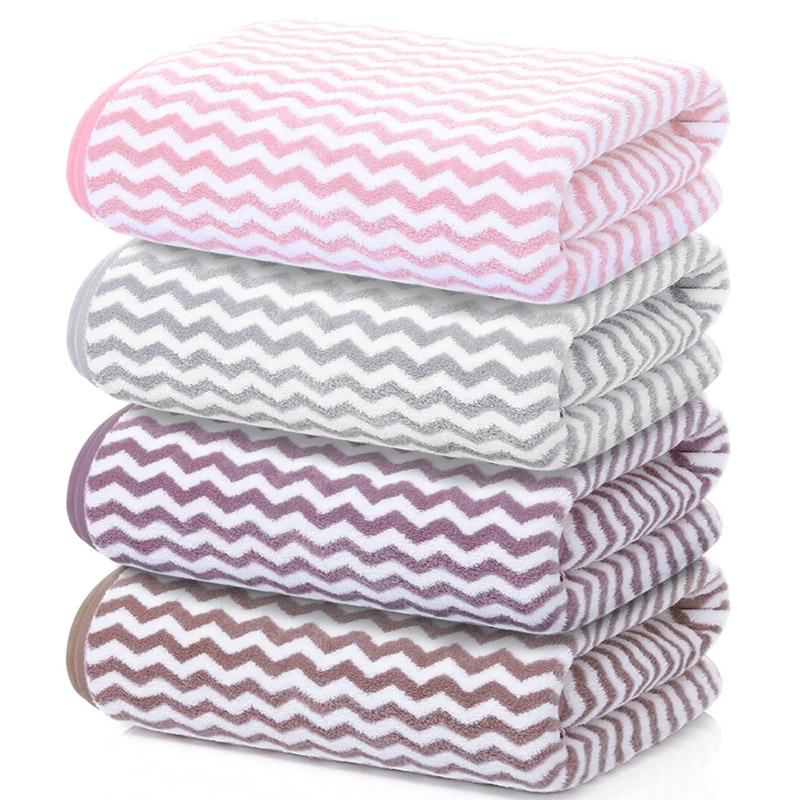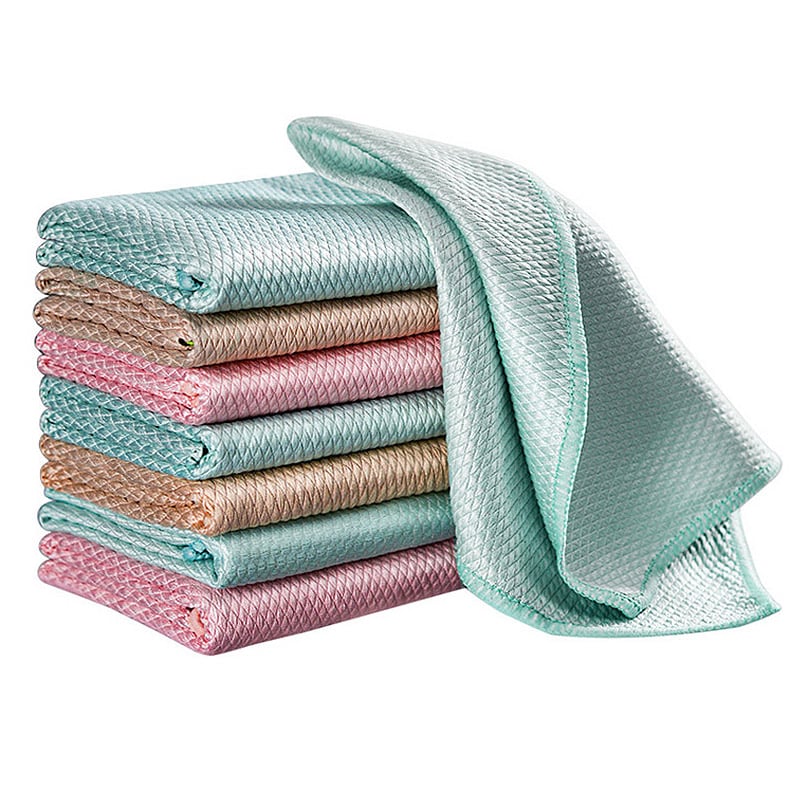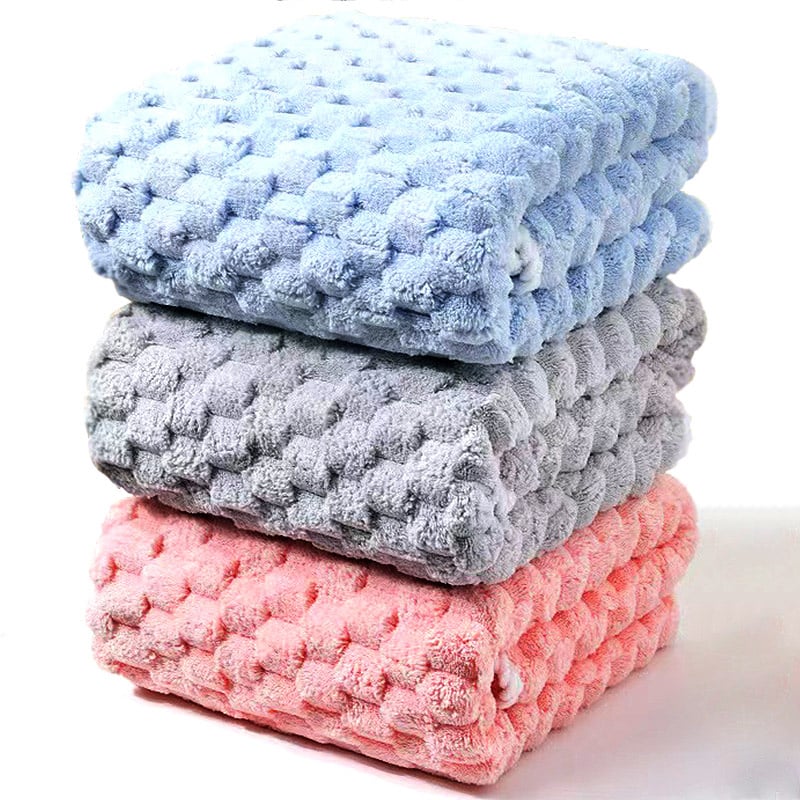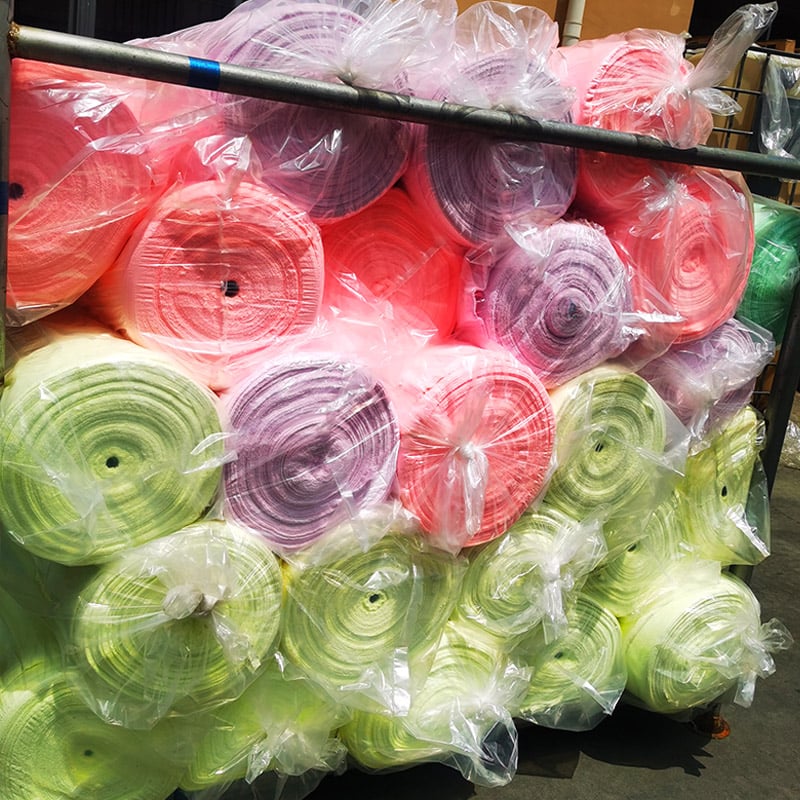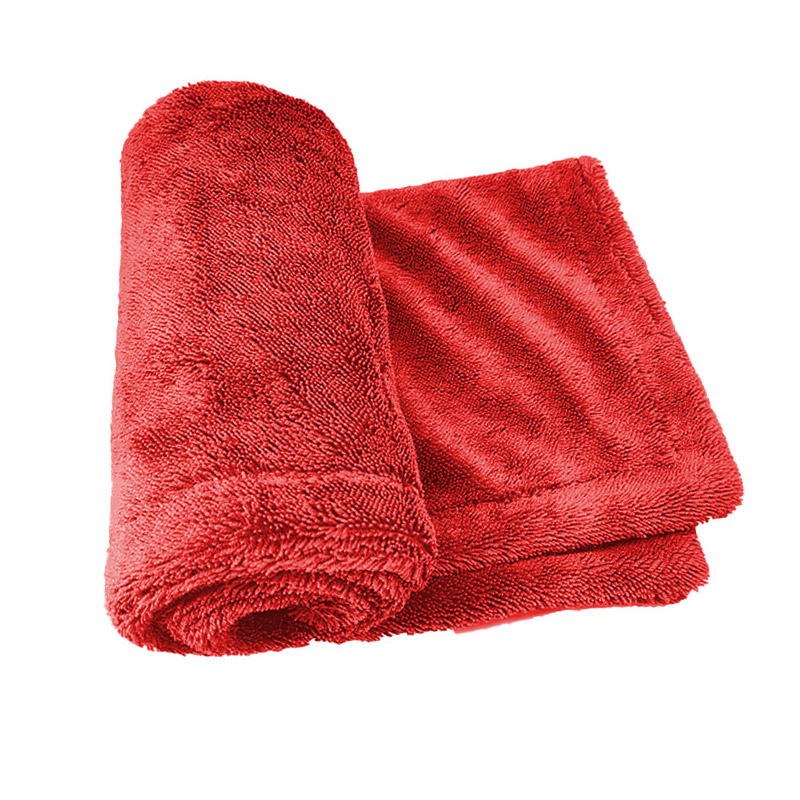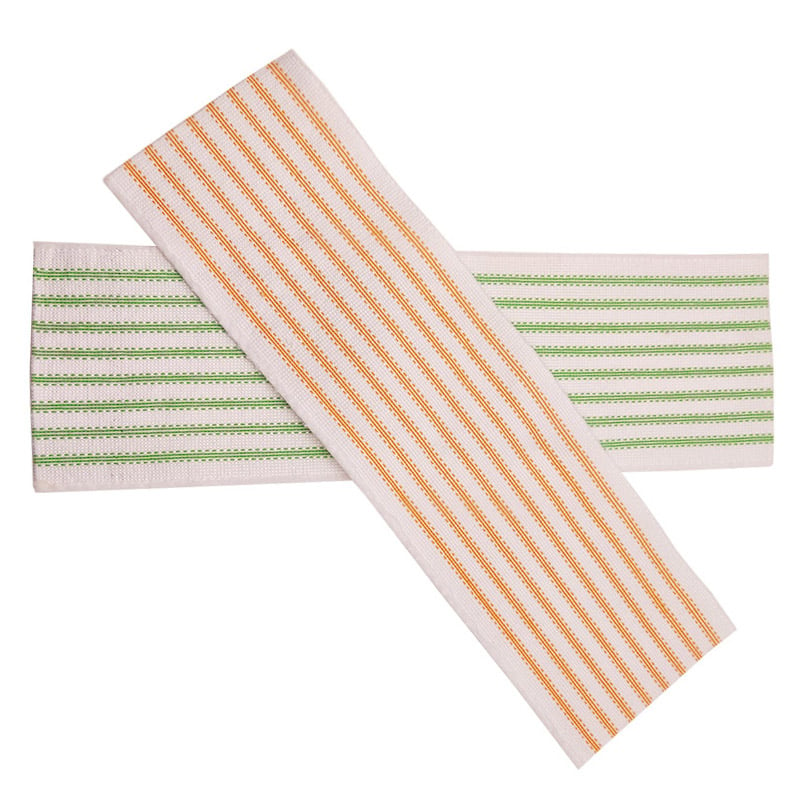

Most mop pad complaints are fit complaints: a pad that will not sit flat, a pocket that tears at the corner, a pad that measures correctly on the packing list and short after ten washes. Each is a specification failure, cheaper to prevent than to argue about.
This guide is for importers, distributors, and brand owners buying OEM mop pads for flat mop systems. It follows the order that decides whether a delivery is usable: measure the frame, write a sheet with tolerances, approve samples, settle packaging, and hold each shipment against a sealed standard.
Five decisions carry the order. The frame sets the size of the microfiber mop pads, the backing sets which frames one design serves, shrinkage decides whether the size still fits, packaging sets landed cost, and the sealed standard sets what a later shipment may differ from.
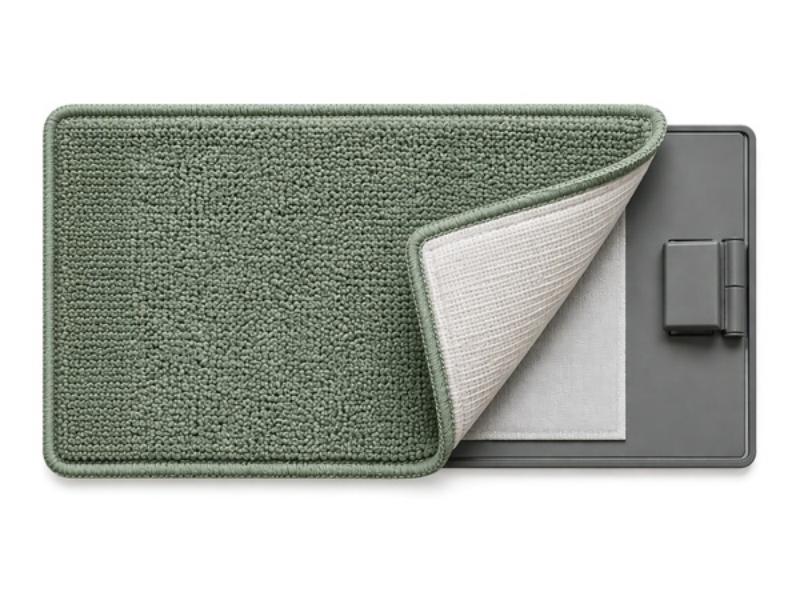
A pad is a fitted part, so the frame is the first specification. Ask for plate length, width, thickness, and clip positions on the frame the microfiber mop pads will be used on. A size taken from a drawing rather than a frame is the most common reason a first order of OEM mop pads is rejected.
Three fit conditions must hold at once. The pad has to wrap the plate without stretching the border, because a seam under tension opens first. It has to stay flat, because a loose flat mop pad bunches ahead of the frame and leaves a wet streak. And it has to clear the locking mechanism.
Attachment differs by frame: hook-and-loop, a pocket at each end, a clip, or a drawstring. It determines the backing, which decides whether one design serves two frame systems. Treat two frame brands as two products until a sample proves one set of flat mop pads fits both.
An adjective cannot be checked at goods-in. Build the sheet from fields that carry a number, a tolerance, and a verification method; these eight cover most disputes on microfiber mop pads.
Fiber blend: the polyester and polyamide ratio as a range, with the method used to confirm it, because polyamide share governs pickup, hand, and pile behaviour after washing.
Fabric weight: GSM with a tolerance band and the state measured, greige or finished, because one number without a band makes a light delivery compliant.
Finished size: cut size, finished size after the stated washes, and a millimetre tolerance on both, because shrinkage turns a correct cut into a pad that no longer fits.
Pile and surface: loop pile height or a flat construction, because the surface decides pickup and drag.
Backing: hook-and-loop with loop grade and covered area, or pocket depth and seam, because this field fails first on commercial mop pads.
Edge: method, width, stitch density, and thread, verified after one wash at the buyer's process, because a tidy border can still open in service.
Color: a signed swatch, the light source, and the wash count before the shade is rechecked, because a screen image is not an acceptance standard.
Performance: the test the buyer will run on microfiber mop pads, such as water pickup by weight or cycles to first failure, agreed in advance.
One sample approval collapses several decisions into one yes. Separate them, so a failure points to a cause.
Stage one is a hand and color swatch for the microfiber mop pads, proving blend, pile, and shade. Record the reference and light source.
Stage two is a sample for flat mop pads, fitted to the buyer's own frame by whoever will use it. Check that it goes on without forcing the border, stays flat through a pass, and holds when lifted wet.
Stage three is a pre-production sample built on the production line with production backing and packaging. Measure rather than judge: weight on a cut sample, finished size after the agreed wash, and pocket depth at three points. For flat mop pads, fit the sample after one wash, because shrinkage changes fit more than appearance.
Sign before bulk fabric is cut; the signed sample governs the order and reorders. Any change to backing, thread, label, or pack count on an OEM mop pads order returns to approval.
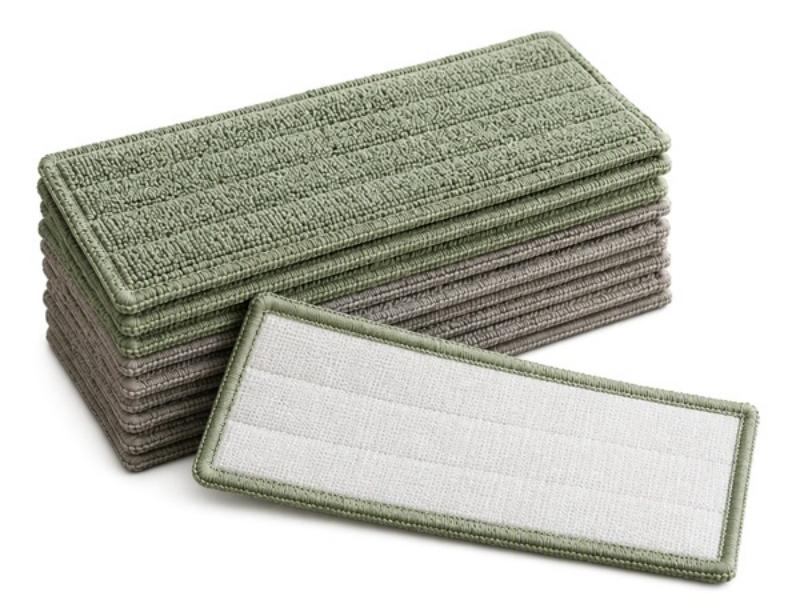
Packaging delays more orders of microfiber mop pads than fabric does, because it is treated as a purchasing detail rather than a production input. Printed cards, bag sizes, and label languages each carry lead time.
Put the pack format in the same document as the pad: pieces per bag, film thickness, header card, carton count, and gross weight. Pads are bulky, so state whether the carton count for flat mop pads assumes compressed or relaxed packing.
For retail programs, add hang tag material, print method, barcode placement, and destination language. Approve artwork as a dimensioned PDF proof, not a photograph of a card; confirm the barcode scans and test label adhesion on the actual film. Print minimums for commercial mop pads programs are quoted separately from the OEM mop pads minimum.
Two microfiber mop pads can look identical on a bench and differ enough in weight to behave differently after ten washes. Protection comes from a sealed standard held by both sides, a measurement routine on every shipment, and records tracing each carton to a fabric lot and backing lot. That discipline is what separates a commercial mop pads program from a flat mop pads spot buy.
Ask for the batch record with the shipping documents: fabric lot, backing lot, cutting date, line, packing date, and inspector. Compare each arrival against the sealed standard, stored like the goods, not against the last delivery.
Four symptoms explain most disputes. A pad that no longer fits its frame means shrinkage moved outside tolerance, so measure finished size after the agreed wash on every lot of microfiber mop pads. A backing that releases early means a different loop grade or narrower coverage, so approve the backing by name.
A border that frays at the corner points to stitch density or thread, so inspect the corners. Short cartons come from manual counting, so count bags before sealing and keep one sealed bag per shipment as the fit reference for flat mop pads reorders.
Agree who inspects commercial mop pads, at which stage, and whether a third party may attend pre-shipment inspection. Define defects in writing, because loose thread means different things in a cutting room and a warehouse.
A useful RFQ for microfiber mop pads is specific enough that two suppliers answer the same question. Send the sheet and close the gaps quotations leave open.
Frame plate dimensions, pad size, and frame brand
Blend ratio, GSM, tolerance band, and state measured
Cut size, finished size after washing, and shrinkage allowance
Pile height, surface, and backing type with loop grade
Border method, width, stitch density, and thread
Color standard, light source, and recheck wash count
Pieces per bag, film, carton count, and gross weight
Artwork format, proof cycle, and print minimum
Pre-production sample contents and approval time
Minimum order quantity per size for OEM mop pads
Batch record fields, sealed standard, and reorder policy
Price terms, packing inclusion, and lead time by size
Four risks repeat. A quote well below the others often reflects weight at the bottom of an unstated tolerance, thinner film, or a count on compressed goods. A sample of flat mop pads from stock proves a supplier can make that pad, not repeat it. A single minimum order figure can hide a per-size minimum on commercial mop pads. And a brochure certificate is not a test report for the delivered lot of OEM mop pads.
This sequence has limits. It suits repeat programs, because sampling, artwork, and a sealed standard cost more than a spot buy can absorb. It cannot validate a pad without the frame and wash process it will meet, and it does not replace a floor trial: commercial mop pads approved on a bench can fail on a coated floor.
Send the specification sheet for a feasibility review.
Include frame dimensions, pad size, backing, packaging requirements, and target quantity per size for microfiber mop pads. Cozihome can confirm which constructions and pack formats fit the brief, which fields still need a sample, and where one design of flat mop pads has to become two.
 Hot News
2026-11-19
2025-08-25
2025-08-22
2025-08-20
 EN