
 EN
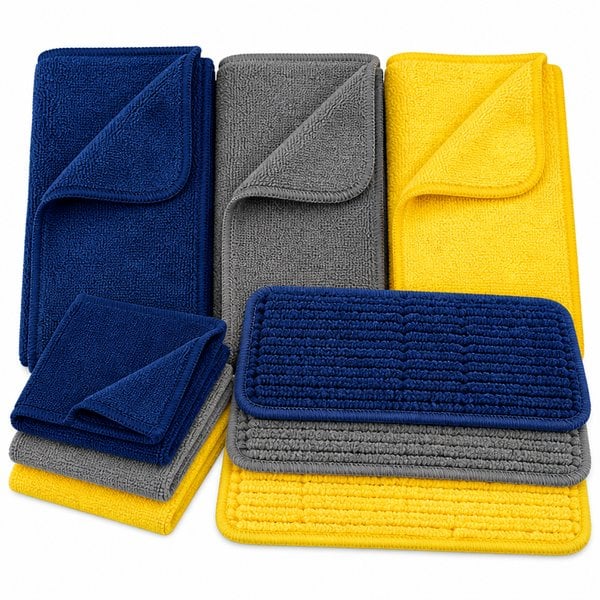
The most common reason commercial microfiber cloths and mop pads smell after washing is residue: detergent, softener, and soil left in the pile, held there by cloth that never dries fully between shifts. The fiber is rarely at fault. The film holds moisture, and the odor returns within minutes of the cloth being wetted again.
This guide is for hotel, contract cleaning, healthcare, and industrial buyers who changed detergent and still have the problem. It separates fabric faults from laundry faults and lists what to confirm before reordering.
Residue, not fiber type, is the usual cause
Microfiber is built to hold material: split filaments create a large surface area with fine spaces, so it lifts soil well and keeps whatever is left behind. Unrinsed detergent, softener film, and soil from a reused bath all sit in those spaces.
The result is a film rather than a stain. It holds moisture and releases odor as soon as the cloth is wetted again.
The blend explains only how the residue behaves. Polyester lifts and releases soil, while polyamide holds water and binds fine particles to the split filaments. Once softener or an under-rinsed detergent occupies those spaces, the cloth keeps a reservoir that surface drying alone does not clear, and every wash adds to it.
Detergent dosed by habit, not load weight and water hardness:
unrinsed surfactant reabsorbs moisture. The cloth feels soapy and the rinse water stays cloudy.
Softener, conditioning sheets, or scent beads:a film that traps odor and reduces pickup. Softener appears in the dosing log and the cloth feels slick.
Rinse too short or too cool for the load:detergent and soil stay in the pad cores. The load smells clean when it is re-rinsed on its own.
Reused wash bath or overloaded machine:soil redeposits onto clean cloth. Cloths look grey or yellow after washing.
Why the smell returns within minutes of use
Moisture is the second half of the mechanism. The parts that dry last are the ones nobody checks: the bound edge of a pad, the center fold of a cloth, the middle of a stack. Cloths stacked while warm trap that moisture.
Storage decides whether it becomes routine. Cloths sealed in bags at shift end, pads left in closed trolley buckets, and linen stored warm without air movement keep the fabric where odor develops. To test, smell the center of a folded pad, then feel the bound edge after a full dry cycle. If either is cool and damp, drying is the fault.
Trolleys repeat the pattern. A bucket closed at the end of a shift holds warm, humid air against the pile, so the pads on top smell by morning while the pads left on a rack do not. Keeping the previous evening's stock separate from the fresh batch usually makes the difference visible without any test.
Wash process and machine conditions that defeat a good wash
A correct detergent dose cannot compensate for a wash that never reaches the fabric. Overloading is the most common failure: cloths need room to move and rinse water must pass through the load, so pads carrying more soil are usually under-washed on a shared cycle. Machine hygiene matters too: drum residue, a clogged filter, a soiled drawer, and a damp door seal seed the next load. So does mixing restroom cloths with food-contact cloths, or greasy industrial rags with room linens. An outsourced laundry adds a process you do not control.
Filter and sump condition belong on the same list. A matted filter slows extraction, so the load leaves the machine wetter than the drying stage was sized to handle. Checking it weekly costs minutes; finding it through a batch of sour pads costs a shift.
Diagnostic checklist: cloth fault or process fault?
Run these on one batch, cheapest action first.
Smell only after the cloth is wetted again:residue film from the wash. Correction wash: no softener, extra rinse, full dry.
Smell strongest in the fold, seam, or pad center:incomplete drying or damp storage. Fix drying and storage first.
One color or zone smells, the others are fine:soil load or cross-use in that zone. Check zone mapping and cloth movement.
Cloth stiff and boardy as well as smelly:mineral or detergent buildup. Review dose, water hardness, and rinse volume.
Odor survives two correction washes:end of service life. Replace the batch and review the specification.
Replace rather than re-wash when the pile is flattened or glazed, the edge frays or a seam opens, a pad stays heavy after a normal dry, or odor returns within one shift after a correct wash. Chlorine and strong oxidizers bring that point forward, since polyamide degrades under repeated oxidizing exposure.
Correct wash, dry, and storage sequence
- Sort by soil type and zone, not color; food-contact and restroom cloths never share a bath, and heavily soiled pads get a pre-flush.
- Dose detergent to load weight and water hardness per the supplier’s instructions; resist topping up by eye.
- Use no fabric softener and no scent additives on microfiber.
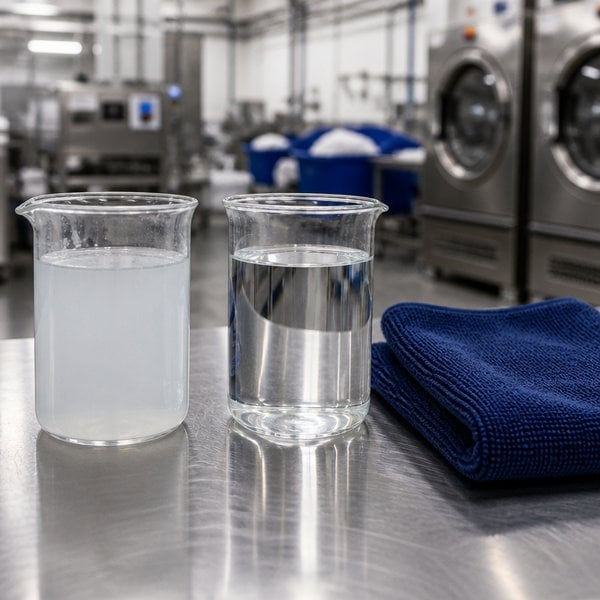
- Run the longest rinse, then check clarity against clean water in a clear cup.
- Keep the load loose; if the drum is packed, the cycle is too full.
- Dry fully, in a single layer where possible, and check the bound edge and core, not the surface.
- Store dry and vented; never bag damp cloths or close a trolley on wet pads.
Correction wash test
Rewash the batch with no softener, half the usual detergent, an extra rinse, and a full dry. Wet one cloth, wait a few minutes, smell it. If the odor has gone, the process caused it; if not, compare with an unused cloth from the same lot. Record the outcome as well: which cloths cleared, which did not, and whether the smell returned by the next shift. That record is what a supplier or an outsourced laundry can act on.
What to specify with your supplier—and where this advice stops
Two laundries running the same routine can get different results because the cloth differs. Confirm these fields in writing, with tolerances, not adjectives.
Fiber blend:the polyester and polyamide ratio as a range, and how it is verified. It controls pickup, soil release, and drying.
Fabric weight:GSM, tolerance, and whether it is measured on greige or finished fabric. Heavier pads hold more water, so drying has to match.
Construction:knit type, pile height, and density. An open pile releases soil and dries faster.
Edge:overlock, ultrasonic, or bound, with width, stitch density, and thread. Bound edges dry last, so moisture hides there.
Packing and trial:vented or sealed bag and pieces per pack, plus whether your wash routine can be run on a sample. Sealed packing with damp storage is the worst case.
Cozihome produces reusable microfiber cloths and mop pads for B2B cleaning programs and confirms blend, weight, edge, and packing options on a sample before a bulk order. Ask any supplier which fields can be inspected on the delivered lot, not only the sample.
Buyer FAQ
-
Is the fabric itself causing the smell?
Usually not; residue and retained moisture explain repeat odor far more often than fiber choice. If cloths smell when a sealed bag is first opened, they picked up moisture in transit; report it with the lot number. -
Can fabric softener or scent beads cover it?
No. Both add a film that traps odor and reduces pickup, so the smell returns stronger and the cloth performs worse. -
How do I tell a laundry problem from a product problem?
Run the correction wash test and compare with an unused cloth from the same lot. A process fault clears; a fabric fault does not. -
How often should cloths and pads be replaced?
On evidence, not the calendar: flattened pile, frayed edge, pads that stay heavy after drying, or odor returning within a shift after a correct wash. Pads usually reach that point first.
Where this advice stops
Odor that starts in building water, drains, waste storage, or ventilation persists regardless of the cloth and must be treated at source. Where laundry is outsourced, the routine belongs to the laundry; only specification and acceptance criteria belong to the buyer. This is an operational diagnosis, not a hygiene validation; facilities needing validated disinfection must follow their own protocol. Disposable nonwoven wipes fall outside this article.
Send four facts and get a diagnosis
Tell Cozihome the material and blend, the GSM, how they are washed and dried today (cycle, detergent, softener, drying), and what the smell is like: when it appears, which zone it affects, and whether it survives a correction wash. We will compare the specification against your process and reply with the likely cause, fields to change next order, and whether another weight or construction is worth testing.
Table of Contents
- Residue, not fiber type, is the usual cause
- Why the smell returns within minutes of use
- Wash process and machine conditions that defeat a good wash
- Diagnostic checklist: cloth fault or process fault?
- Correct wash, dry, and storage sequence
- What to specify with your supplier—and where this advice stops